

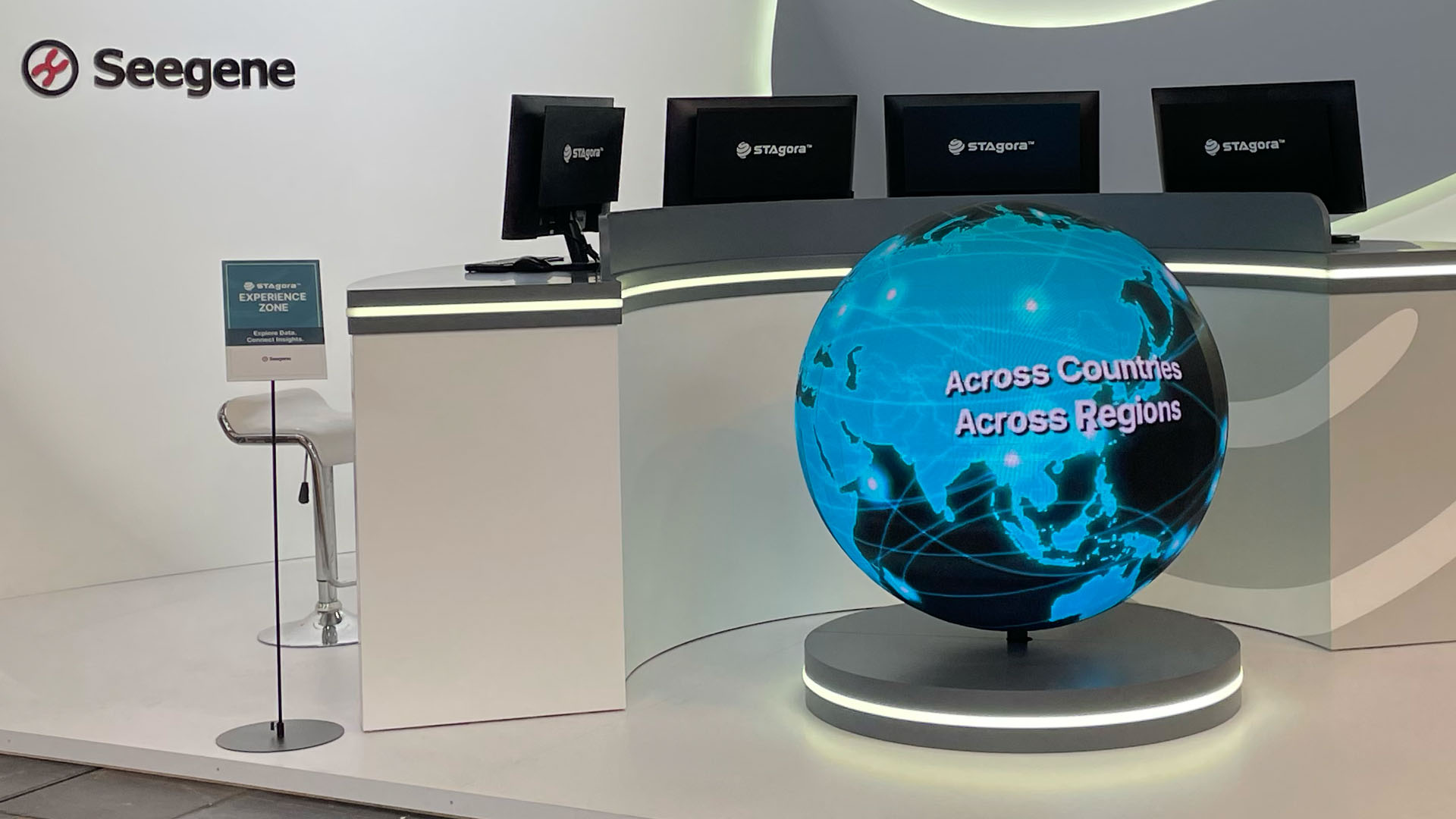
There’s a reason why more exhibition stands are moving beyond traditional flat LED walls.
It’s not because standard LED screens stopped working – quite the opposite.
Large LED walls are still one of the strongest tools for presenting content at trade shows, conferences and congresses. The difference is that brands today are looking for ways to make those systems feel more dynamic, architectural and integrated into the entire booth experience.
This is exactly where solutions like spherical LED screen and kinetic LED screen start making a real difference.
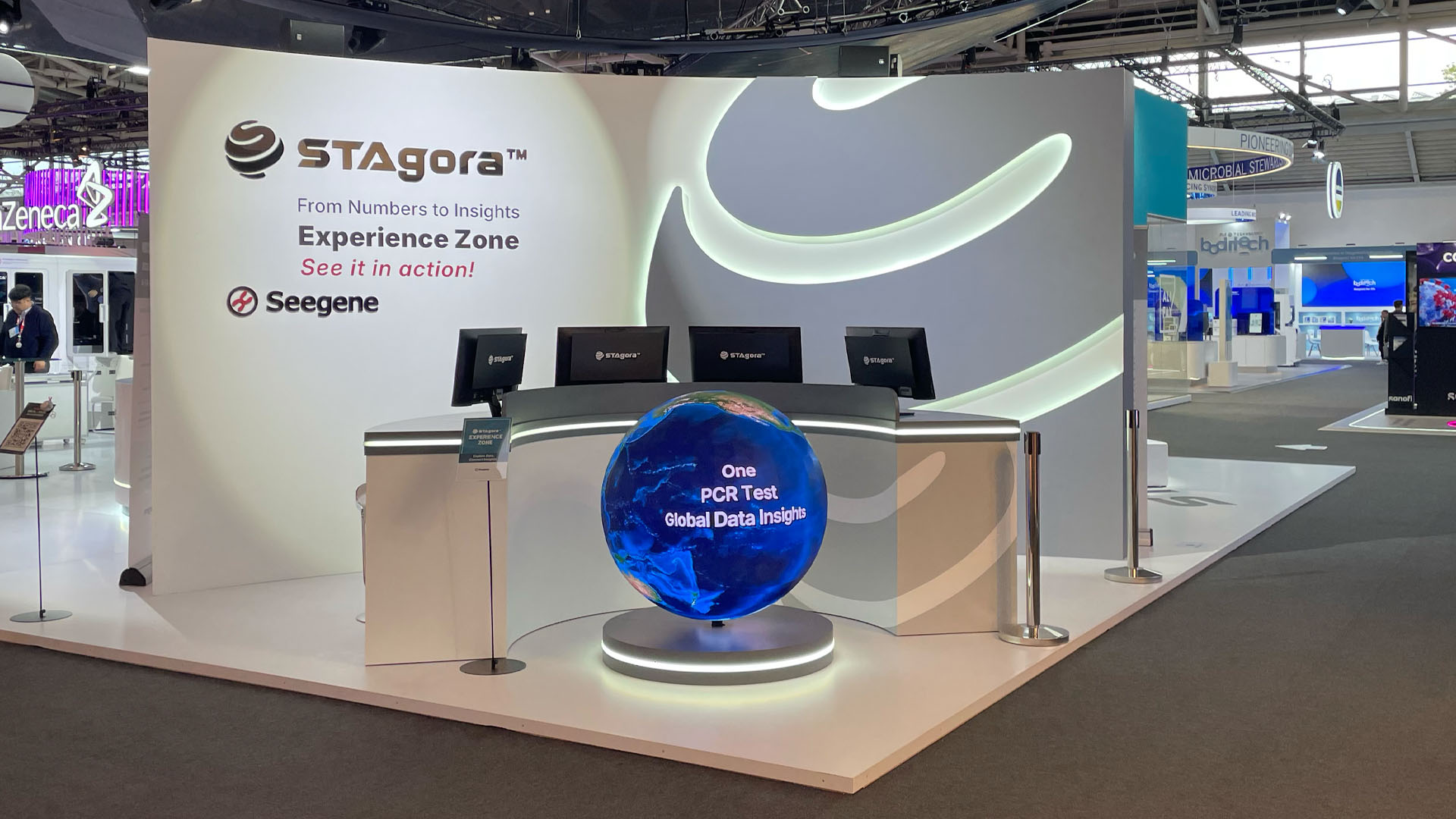
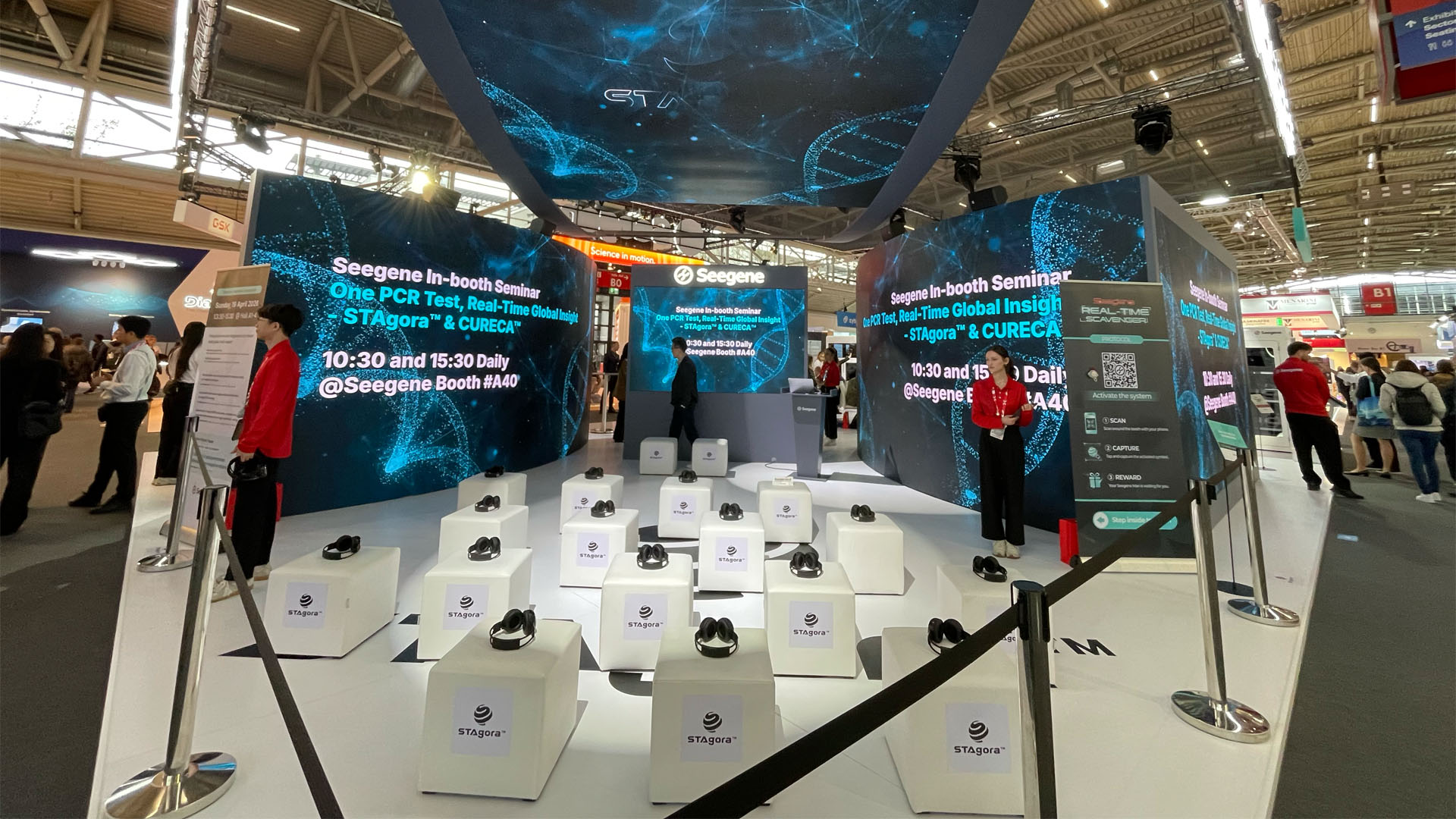
At ESCMID Global Congress in Munich, our P1.86 LED sphere became one of the key visual elements of the booth, working together with large LED surfaces, suspended structures, lighting and synchronized content.
And that’s probably the most important thing to understand about modern event technology today – the strongest exhibition concepts are no longer built around a single screen. They are built around how multiple visual layers work together.
The technical reality behind LED spheres
From a technical perspective, spherical LED screens are significantly more demanding than standard LED walls.
Content must be prepared specifically for spherical playback, because animations, movement and perspective behave differently on curved surfaces. Even small inconsistencies in mapping or brightness become immediately visible once the display is viewed from multiple directions.
This means that deploying a sphere successfully is not only about the hardware itself, but also about content adaptation, signal processing and on-site calibration.
For the Seegene project during ESCMID Munich, our team handled the installation, configuration and playback setup directly on-site, ensuring that the sphere worked consistently throughout the event together with the surrounding LED structures and synchronized content systems. And this is where properly integrated event technology becomes important. A sphere only works well when it functions as part of a larger visual system.
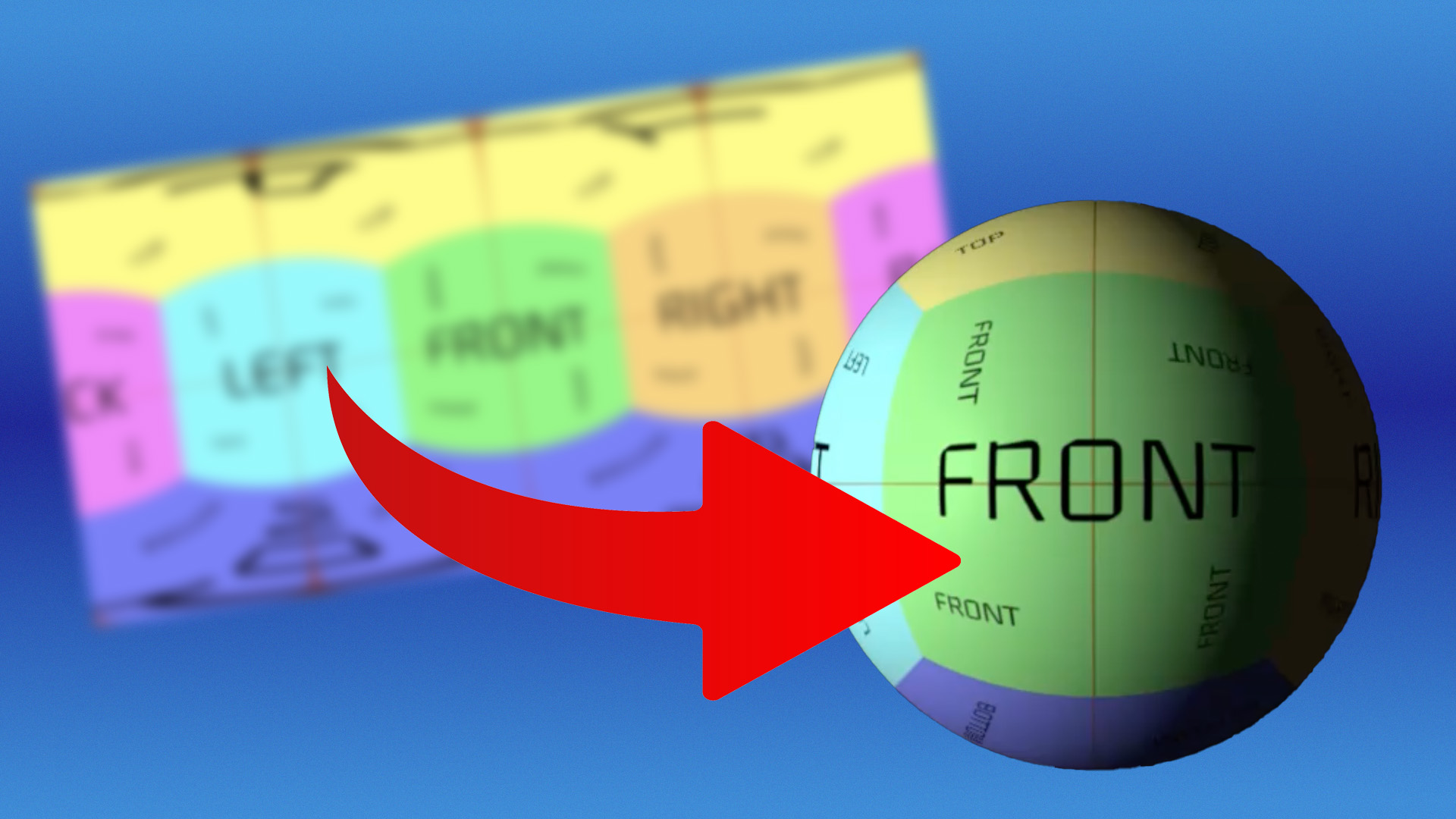
Mapping example for spherical LED screen
The growing popularity of kinetic LED screens
Another solution that is rapidly changing exhibition spaces is kinetic LED technology.
Unlike traditional LED installations, kinetic screens introduce movement into the structure itself. LED elements can move and react dynamically to programmed content sequences, creating a constantly evolving visual environment inside the booth.
This changes how visitors perceive the space. Movement naturally attracts attention, but more importantly, it creates rhythm and depth that static structures simply cannot achieve. When synchronized correctly with lighting and video content, kinetic LED screen allow brands to present content in a much more physical and spatial way.
At the same time, kinetic solutions require precise engineering and programming. Motion systems, content synchronization and playback timing all need to work together perfectly for the effect to feel seamless during a live event.
Modern stands are becoming architectural
One of the biggest shifts happening in exhibition design today is that LED technology is no longer treated as a separate object placed inside the stand. Instead, it increasingly becomes part of the architecture itself.
Suspended LED ceilings, curved structures, integrated spheres, transparent and kinetic screens allow brands to shape the space around visitors rather than simply displaying content on a wall. This creates booths that feel more recognizable, easier to navigate and visually stronger from long distances across the exhibition hall.
At ESCMID, the combination of large LED walls, the spherical display, synchronized lighting and suspended structures created exactly this kind of layered visual environment – one where every element supported the others instead of competing for attention.
LED sphere – built for real event conditions
Complex visual systems only matter if they perform reliably during live events. Trade show environments place constant pressure on every technical element – long operating hours, limited build-up windows, transport logistics, rigging limitations and continuous public use.
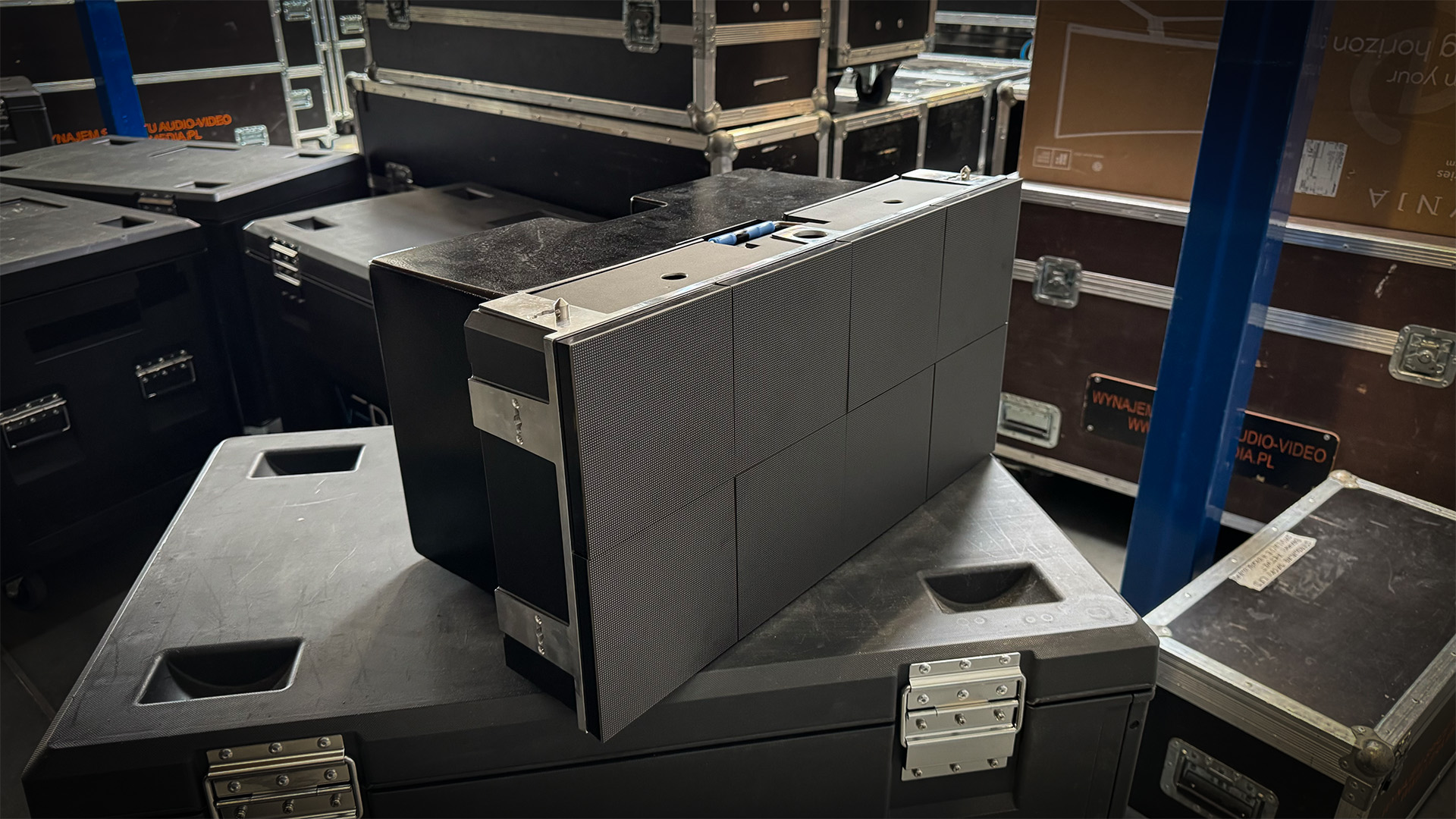
The P1.86 LED sphere was designed specifically for professional event deployment, featuring a 1.86 mm pixel pitch, 3840 Hz refresh rate and durable GOB-protected LED modules suitable for repeated installations. More importantly, the system is flexible enough to work in multiple configurations, including suspended installations, floor-based setups and integration into custom booth structures.
And this flexibility is exactly why more brands are starting to combine spherical, kinetic and traditional LED technologies together rather than treating them as separate categories.
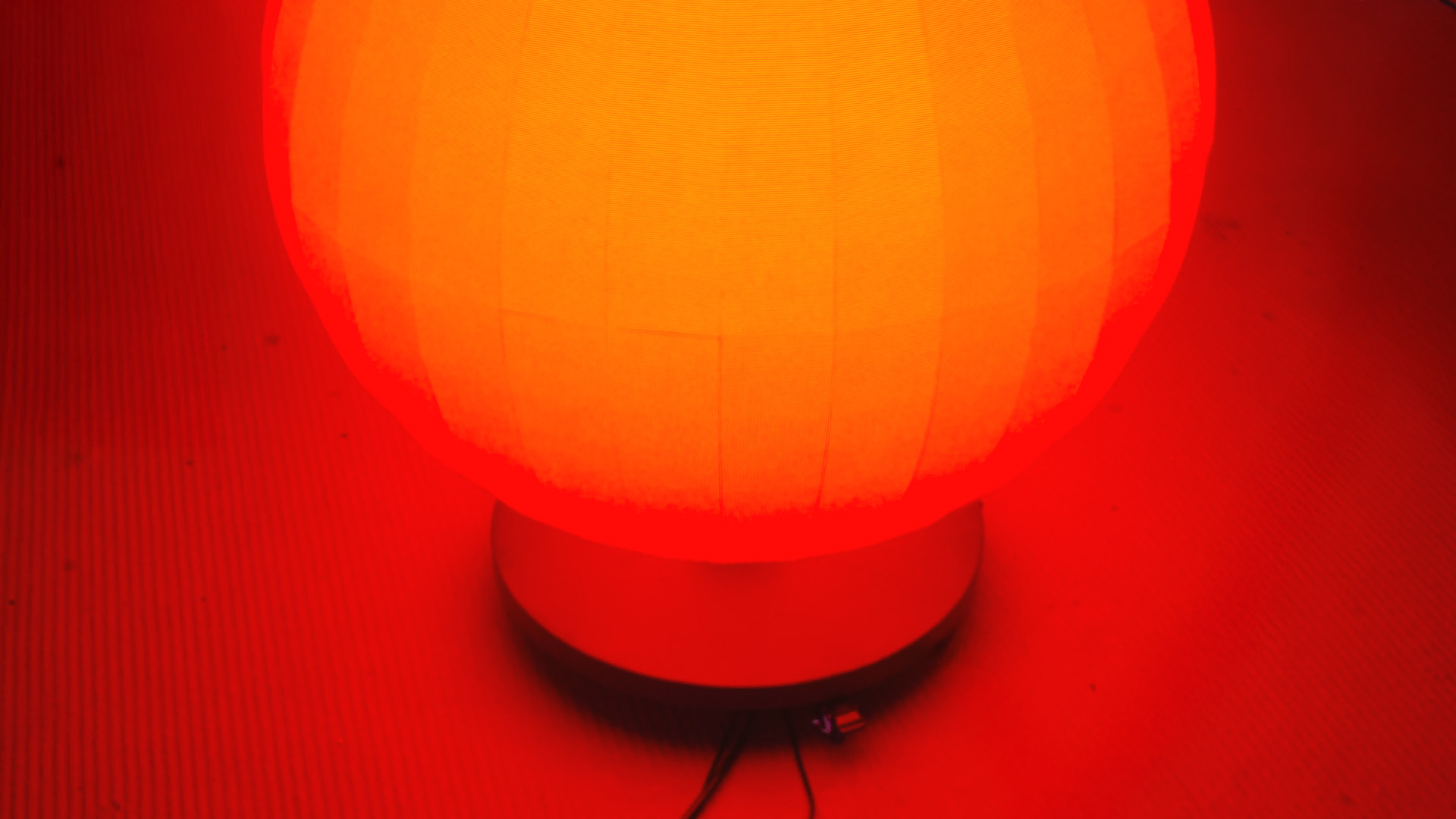
See the sphere in action
The P1.86 LED Sphere 1 m is available for exhibitions, congresses, showrooms and custom event installations through Vera Multimedia.
If you would like to explore how spherical LED technology, kinetic systems and large-format LED structures can work together within your project, our team will support the entire process – from concept development to on-site execution.
👉🏻 Discover the P1.86 LED Sphere
👉🏻 See the full ESCMID project breakdown